
The Trump administration’s announcement of a $20 billion maritime reinsurance facility through the U.S. International Development Finance Corporation (DFC) is not just another policy tweak — it is a bold, unprecedented deployment of a development finance agency as a wartime economic weapon. In the shadow of escalating U.S.-Israel strikes on Iran and Tehran’s retaliatory threats, global energy markets have seized up. Private insurers have fled the Persian Gulf. Tanker traffic through the Strait of Hormuz — the artery carrying 20% of the world’s daily oil consumption — has ground to a near-total halt.
This is the War Economy in action: Washington is using American financial muscle and naval power to underwrite global commerce when markets fail. Here is the full investigative breakdown.
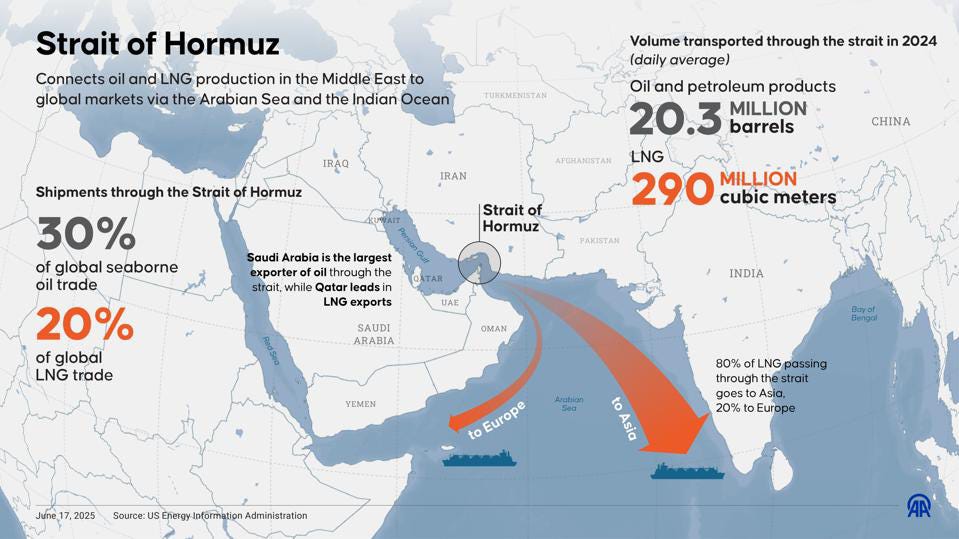

The Strait of Hormuz Crisis: 20% of Global Oil — Paralyzed
For decades, energy analysts have warned that the Strait of Hormuz is the planet’s most dangerous chokepoint. On any normal day, roughly 21 million barrels of crude oil and petroleum products, plus 290 million cubic meters of LNG, thread the 21-mile-wide passage between Iran and Oman.
Since U.S. and Israeli airstrikes intensified last weekend, that flow has collapsed. Iranian threats, drone and missile attacks on commercial vessels, and the immediate withdrawal of private war-risk insurance have left shipowners unwilling to risk hulls, crews, or cargo. Some Gulf producers have already begun cutting output because storage is full and export routes are blocked.
The result? U.S. crude (WTI) surged more than 12% in a single session, topping $90 per barrel on March 6. Brent crude climbed to $92–$93, posting one of its strongest weekly gains since the early days of the Covid crash. Qatar’s energy minister warned that prolonged disruption could push prices toward $150 and “bring down the economies of the world.”
This is not abstract geopolitics. It is a live stress test of the global energy system — and the Trump administration is responding with the tools of a war economy.
The Federal Backstop: DFC’s $20 Billion Emergency Shock Absorber
At the heart of the response is the DFC — an agency historically tasked with development finance in lower-income countries — now repurposed as an emergency shock absorber for the $350+ billion in maritime assets currently exposed in the Gulf.
On March 6, DFC CEO Ben Black and Treasury Secretary Scott Bessent jointly announced the facility: up to $20 billion in rolling reinsurance coverage for hull, machinery, cargo, and war-risk losses on vessels transiting the Gulf. The coverage will be provided through American insurance partners, restoring the confidence private markets abandoned overnight.
Black’s statement was direct:
“We are confident that our reinsurance plan will get oil, gasoline, LNG, jet fuel, and fertilizer through the Strait of Hormuz and flowing again to the world.”
This is classic War Economy thinking — treating energy security as national defense, not purely commercial risk. By stepping in where Lloyd’s of London and other reinsurers retreated, the U.S. government is effectively nationalizing a slice of the risk to prevent a broader economic shock.

The Bessent-Black Strategy: American Insurance Partners + Treasury Muscle
The collaboration between Treasury Secretary Scott Bessent and DFC CEO Ben Black is deliberate. Bessent, a veteran markets operator, understands that confidence is the scarcest commodity in wartime shipping. Black brings DFC’s existing political-risk insurance expertise — now scaled to a maritime theater.
The strategy is two-pronged:
- Offer reinsurance at “reasonable” (i.e., subsidized) rates that private markets will not touch.
- Channel coverage exclusively through U.S.-based insurance partners, keeping the financial backstop within American control.
This is not charity. It is strategic economic statecraft: use federal balance-sheet capacity to unlock private capital and keep global supply chains moving under the Stars and Stripes.
Military Muscle: DFC Coverage Guaranteed by CENTCOM
Here is the element that makes the plan credible — and truly unprecedented. The DFC explicitly states it is working “in close coordination with U.S. Central Command (CENTCOM)”.
Translation: the $20 billion paper guarantee is backed by the physical presence of the U.S. Navy in the Gulf. President Trump has already signaled that American naval convoys will escort insured tankers “if necessary.” In practice, the reinsurance facility functions as a financial force multiplier for CENTCOM’s deterrent power.
Analysts familiar with past tanker-war scenarios (1980s “Tanker War”) note that insurance + naval escorts proved decisive. The Trump plan combines both — at scale and speed.
 |
| Can Trump Really Defend All Tankers in the Persian Gulf? - WSJ |
Risk vs. Reality: JPMorgan Calls $20 Billion “Too Small” for $350 Billion Exposure
Not everyone is convinced. JPMorgan analysts, in a note widely cited by the Financial Times, argue the U.S. government lacks the firepower to cover the full $350 billion in hull, cargo, and liability exposure currently at risk in the Gulf. They estimate DFC’s practical headroom at roughly $154 billion — still far short of a worst-case scenario involving multiple large claims.
Other voices (Kpler, RBC Capital Markets) echo the skepticism: insurance is secondary to physical security. Tankers will not sail until shipowners believe Iran’s ability to strike has been materially degraded.
The administration counters that $20 billion is a rolling backstop — not a one-time cap — and that the psychological effect of U.S. government backing plus naval escorts will be enough to restart traffic. History suggests they may be right: markets often respond to credible signals of American resolve faster than pure actuarial calculations predict.
Economic Stakes: Preventing a Global Energy Shock Before It Hits U.S. Gas Pumps
Brent crude surging toward $90–$95 is already rippling through futures curves, refinery margins, and consumer expectations. U.S. gasoline prices, which had been relatively tame, are now under upward pressure. A prolonged Hormuz closure risks:
- Global inflation spike (energy is the ultimate cost-push driver)
- Supply-chain disruptions for chemicals, plastics, and fertilizer
- Strategic vulnerability for Europe and Asia, which depend far more heavily on Gulf crude than the U.S. does
The Trump team’s explicit goal is to prevent this global energy shock from materializing before it reaches American drivers and manufacturers. In War Economy terms, the reinsurance plan is preemptive stabilization — cheaper than the alternative of higher defense spending or strategic petroleum reserve releases alone.
The Unprecedented Use of a Development Agency as Domestic Economic Shield
Never before has the DFC — created to promote development abroad — been deployed at this scale as a wartime domestic economic shield. Critics may call it mission creep. Supporters see it as adaptive statecraft: when private markets freeze in the face of geopolitical fire, the U.S. government leverages every tool in its arsenal.
This is the War Economy doctrine in practice — treating the global energy commons as a strategic asset worth defending with both financial innovation and military presence.
The Trump administration’s $20 billion DFC maritime reinsurance facility is a high-stakes bet: that American insurance + American naval power can break the paralysis gripping the Strait of Hormuz. Whether $20 billion proves sufficient, or whether physical security remains the binding constraint, the next 72–96 hours will tell.
What is already clear is the doctrinal shift. In 2026, energy security is national security — and Washington is willing to rewrite the rulebook to protect it.


Comments