
 |
| Redefining Alternatives® | Blue Owl Capital |
Blue Owl Capital (NYSE: OWL) is dominating financial headlines and search trends as of April 4, 2026, after its shares plunged nearly 9% in a single session and hit 52-week lows. The alternative asset manager, a leader in private credit, is now grappling with record $5.4 billion in redemption requests across two flagship semi-liquid funds.
Investors are flooding search engines with queries like “Blue Owl withdrawal limits,” “Blue Owl redemption cap,” “How to withdraw from Blue Owl OCIC,” and “Why is Blue Owl limiting redemptions?” This surge reflects growing fears over private credit liquidity mismatch, pro-rata redemption 5% caps, and broader questions about the stability of the $1.8 trillion private credit asset class.
Here’s a complete, expert-driven breakdown of the Blue Owl Capital news today, the funds involved (OCIC, OTIC, OBDC II), the role of AI disruption in software loans, and what it means for private credit investors in 2026.
What Triggered the Blue Owl Capital Stock Price Drop?
 |
| Blue Owl (OWL) Co-CEO Marc Lipschultz Says He's Open to Bank Tie-Up - Bloomberg |
On April 2, 2026, Blue Owl Capital revealed unprecedented redemption pressure in investor letters:
- Blue Owl Credit Income Corp (OCIC) — the firm’s $36 billion flagship fund — received redemption requests for 21.9% of shares (up sharply from 5.2% the prior quarter).
- Blue Owl Technology Income Corp (OTIC) — the smaller tech-focused fund — saw requests for 40.7% of assets (up from 15.4%).
Combined, these totaled approximately $5.4 billion in withdrawal demands. In response, Blue Owl enforced its standard 5% quarterly redemption cap (pro-rata across tendering shareholders), leaving the vast majority of requested capital “locked up” for future quarters.
The market reaction was swift: OWL stock opened sharply lower, traded as low as $7.95 intraday, and closed at $8.57 (down 1.61% on the day but part of a broader 9%+ decline from recent levels). Shares are now at multi-month lows, with analysts trimming price targets amid concerns over retail investor flight.
Blue Owl stock price and “OWL stock crash” searches have spiked alongside “Marc Lipschultz Blue Owl” (Co-CEO) as investors seek context from leadership commentary on the tech lending exposure.
The Funds at the Center: OCIC, OTIC, and OBDC II Explained

Blue Owl’s retail-oriented Business Development Companies (BDCs) have been popular with individual investors seeking yield in a high-interest-rate environment. Here’s the breakdown:
| Fund Ticker | Fund Name | Approx. AUM | Redemption Requests (Q1 2026) | Key Exposure |
|---|---|---|---|---|
| OCIC | Blue Owl Credit Income Corp | $36 billion | 21.9% | Broad private credit lending |
| OTIC | Blue Owl Technology Income Corp | $3 billion | 40.7% | Tech/software company loans |
| OBDC II | Blue Owl Capital Corporation II | Smaller legacy | Earlier liquidity actions (Feb 2026 asset sales) | Direct lending (prior gating) |
- OCIC and OTIC are semi-liquid vehicles offering quarterly tender offers, but the structure includes built-in redemption caps to prevent forced fire sales of illiquid loans.
- OBDC II faced separate liquidity measures earlier in 2026, including asset sales and halted redemptions in some cases, highlighting ongoing challenges in matching investor liquidity demands with underlying private credit holdings.
The Blue Owl Tech Lending Fund (OTIC) was hit hardest, with Blue Owl itself citing concerns around AI disruption software loans as a factor in the exodus.
Blue Owl Withdrawal Limits and Liquidity Mismatch: What Investors Need to Know
 |
| What the hell is happening with Private Credit? |
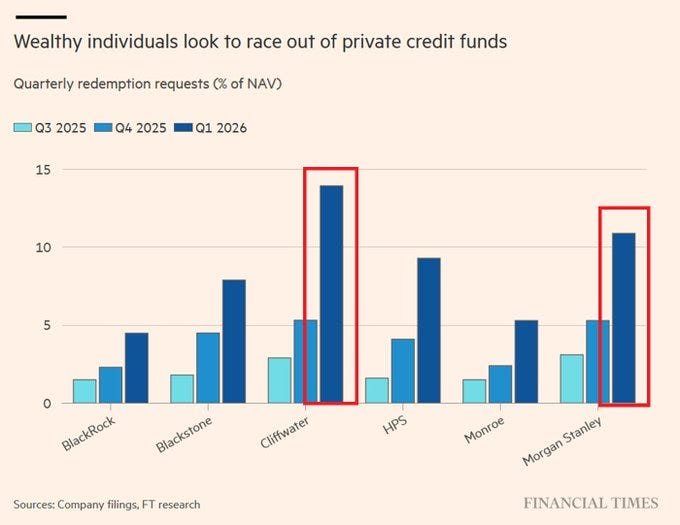
Blue Owl is not “gating” entirely — it is honoring the contractual 5% pro-rata redemption per quarter. However, with requests far exceeding that level, most investors will wait months or years for full liquidity.
This is classic private credit gating mechanics at work: unlike mutual funds or ETFs, these semi-liquid BDCs hold illiquid direct loans to middle-market companies. A sudden wave of redemptions forces managers to either sell assets at a discount or slow payouts to protect remaining shareholders.
Search volume for “Blue Owl liquidity mismatch” and “private credit bubble 2026” is rising as retail investors confront the reality that “semi-liquid” does not mean instant cash.
Long-tail queries dominating Google right now:
- “How to withdraw from Blue Owl OCIC”
- “Why is Blue Owl limiting redemptions?”
- “Blue Owl $36 billion fund redemption cap”
Why Now? AI Disruption, Shadow Banking Contagion, and Industry-Wide Pressure
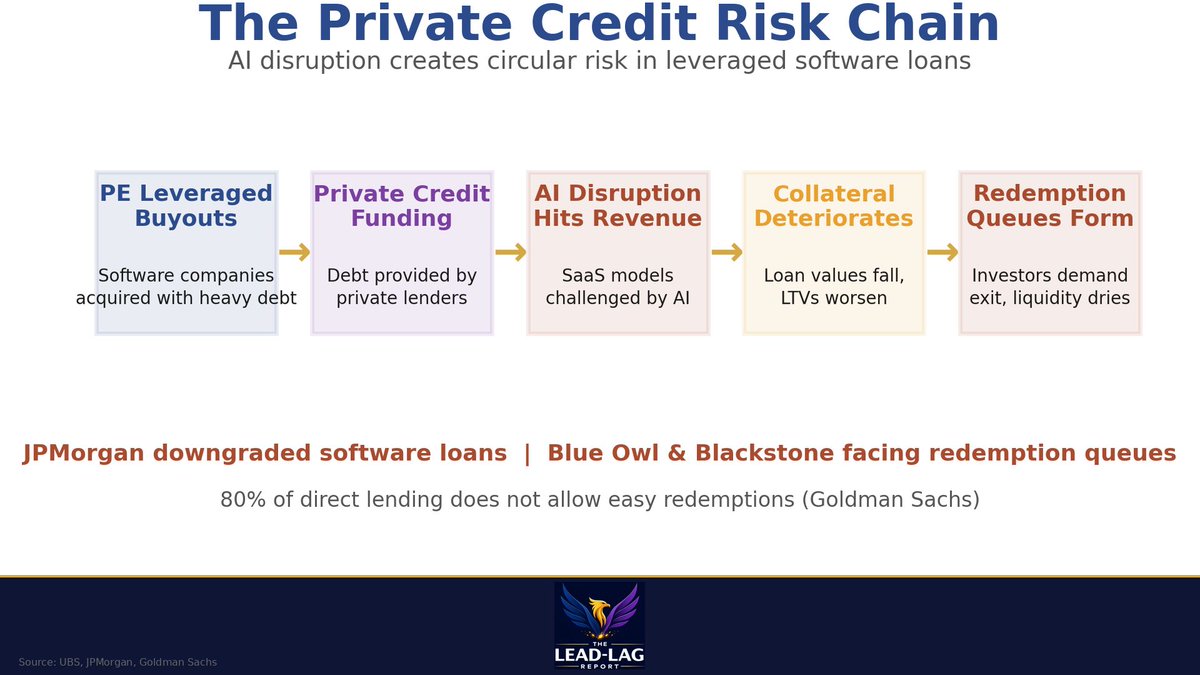 |
| Private credit is loaded with software loans. AI is disrupting the same software companies backing those loans. This is circular risk that almost nobody is stress-testing |
Blue Owl’s challenges mirror broader private credit stress:
- AI disruption in software loans — OTIC’s heavy tech exposure has investors worried about repayment risk if AI reshapes software business models.
- Competitive pressure from peers like Blackstone BCRED redemptions (which also faced outflows).
- Macro warnings from figures like Jamie Dimon private credit warning, who has long cautioned about risks in non-bank lending (“shadow banking”).
- Fear of semi-liquid fund risks and potential shadow banking contagion if redemptions cascade across the industry.
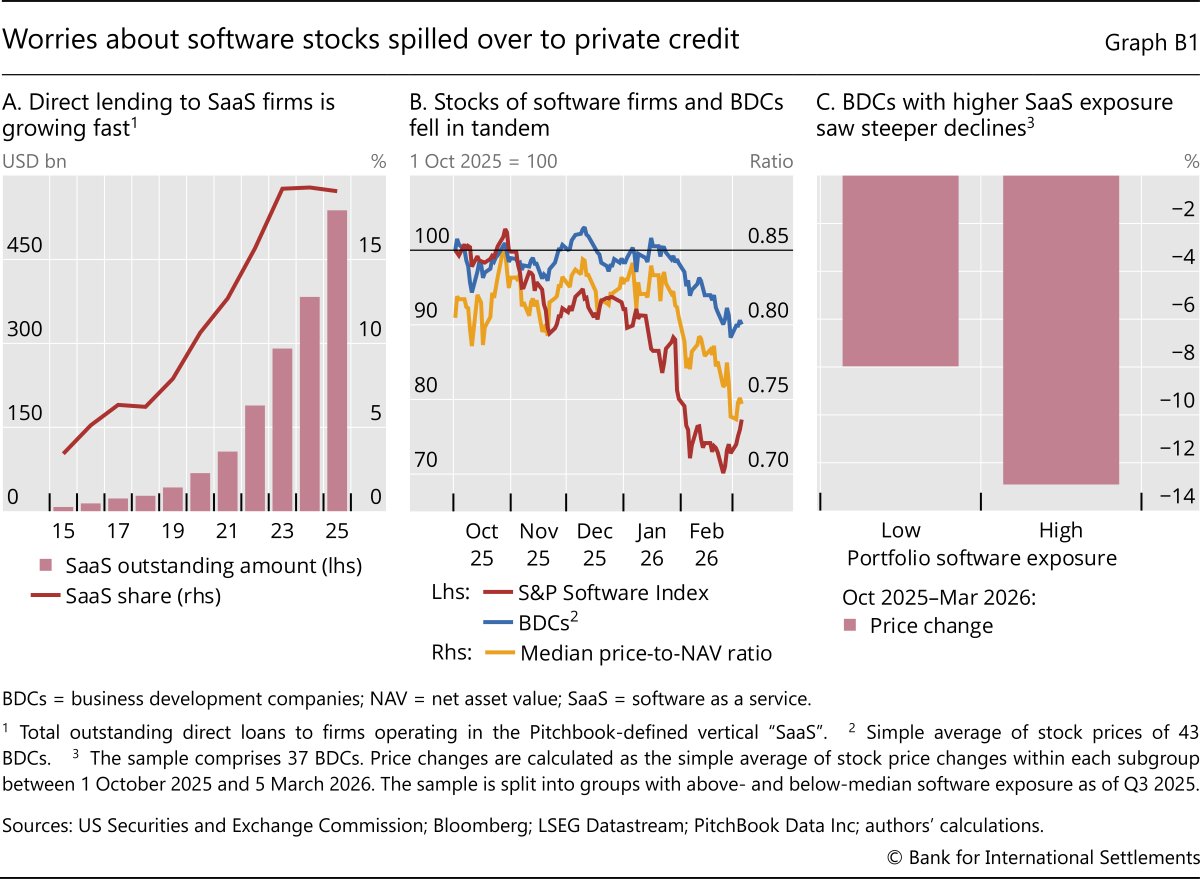 |
| Private credit's software lending meets AI disruption |
Blue Owl is not alone — several large managers have seen elevated requests, but the scale at OCIC/OTIC has drawn the most scrutiny.
 |
| Private credit alarm bells echo 2007 subprime warnings | Reuters |
What Should Investors Do? Practical Guidance
- Review your specific fund documents — Check OCIC, OTIC, or OBDC II tender offer calendars on Blue Owl’s investor portal.
- Understand the 5% cap — Only a fraction of requests will be met this quarter; remaining balances roll forward.
- Assess your liquidity needs — These vehicles were designed for long-term allocation, not short-term trading.
- Diversify and monitor — Private credit still offers attractive yields, but liquidity risk is now front-and-center.
- Consult a financial advisor — This is not financial advice; individual circumstances vary.
Disclaimer: This article is for informational purposes only and does not constitute investment, tax, or legal advice. Blue Owl Capital (OWL), OCIC, OTIC, and related funds involve significant risks, including loss of principal and limited liquidity. Always review official SEC filings and consult licensed professionals before making decisions.
The private credit sector remains a multi-trillion-dollar force, but the events at Blue Owl Capital underscore why EEAT (Experience, Expertise, Authoritativeness, Trustworthiness) matters in financial content: transparency about liquidity limits and risks is essential in 2026’s volatile markets.
Stay tuned for Q1 2026 earnings from Blue Owl Technology Finance Corp. and updates on OWL stock. For the latest on Blue Owl Capital news today, bookmark reliable sources and monitor redemption calendars directly.


Comments