
Main source: Woodward HN, Myhrvold NP, Horner JR. 2026. Prolonged growth and extended subadult development in the Tyrannosaurus rex species complex revealed by expanded histological sampling and statistical modeling. PeerJ 14:e20469. https://doi.org/10.7717/peerj.20469
For decades, scientists believed that Tyrannosaurus rex (T-rex) grew very quickly – undergoing a growth spurt during adolescence, becoming a massive 8- to 9-ton predator by the age of 20-25. This assumption was based on studies dating back to the early 2000s and updates dating back to 2024.
But a revolutionary study published in January 2026 completely changed this perception. Led by Oklahoma State University paleohistologist Dr. Holly Woodward, the team, including Nathan Myhrvold and renowned paleontologist Jack Horner, created the largest histological dataset of femur and tibia bones from 17 T-rex specimens . They made thin slices, observed growth rings (Lines of Arrested Growth - LAGs) with plane-polarized and circular-polarized light, and tracked growth year-by-year using advanced statistical modeling.
Key findings: T-rex was a true late bloomer According to the best models, T-rex reached full adult size (about 8,000–8,800 kg or 8–9 tons) at 35–40 years of age. This is 10–15 years longer than older estimates! Growth was slow and prolonged – spending much time in the juvenile and subadult stages, not a rapid "teen spurt."
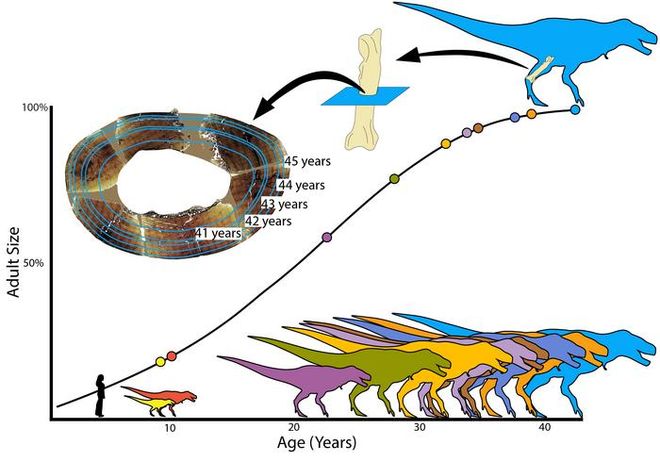
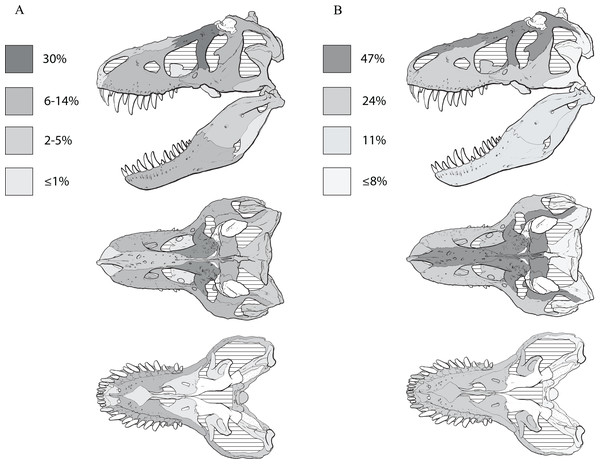
This growth curve is quite different from the old fast model.
How was the study conducted? (EEAT breakdown)
- Expertise and reliability
- Dr. Holly Woodward: World-renowned expert in paleohistology.
- Jack Horner: Discoverer of Maiasaura nesting grounds, consultant on the Jurassic Park films.
- Publication: PeerJ – open-access, peer-reviewed journal, all reviews public.
- Data Quality
- 17 specimens: from small juveniles to large adults.
- Technique: Bone slicing + also showed faint rings hidden by CPL light.
- Older studies included hidden multiplets (double LAGs), which showed increased age and slowed development.
- Reliability
- Added partial records of several samples from the new algorithm.
- Includes all CGMs (Growth Marks) – making confidence intervals narrower and more trustworthy.
Important implications of this study
- The life cycle changed —young T-rexes remained medium-sized "subadults" for decades, competing with smaller predators. Only rare giants, 40+ years old, were the true kings.
- Lifespan – potentially up to 45-50 years .
- Species debate — The long subadult phase argues for a separate species like Nanotyrannus .
- Broader implications – The evolution of other theropods (Allosaurus, Giganotosaurus) also needs to be reexamined.
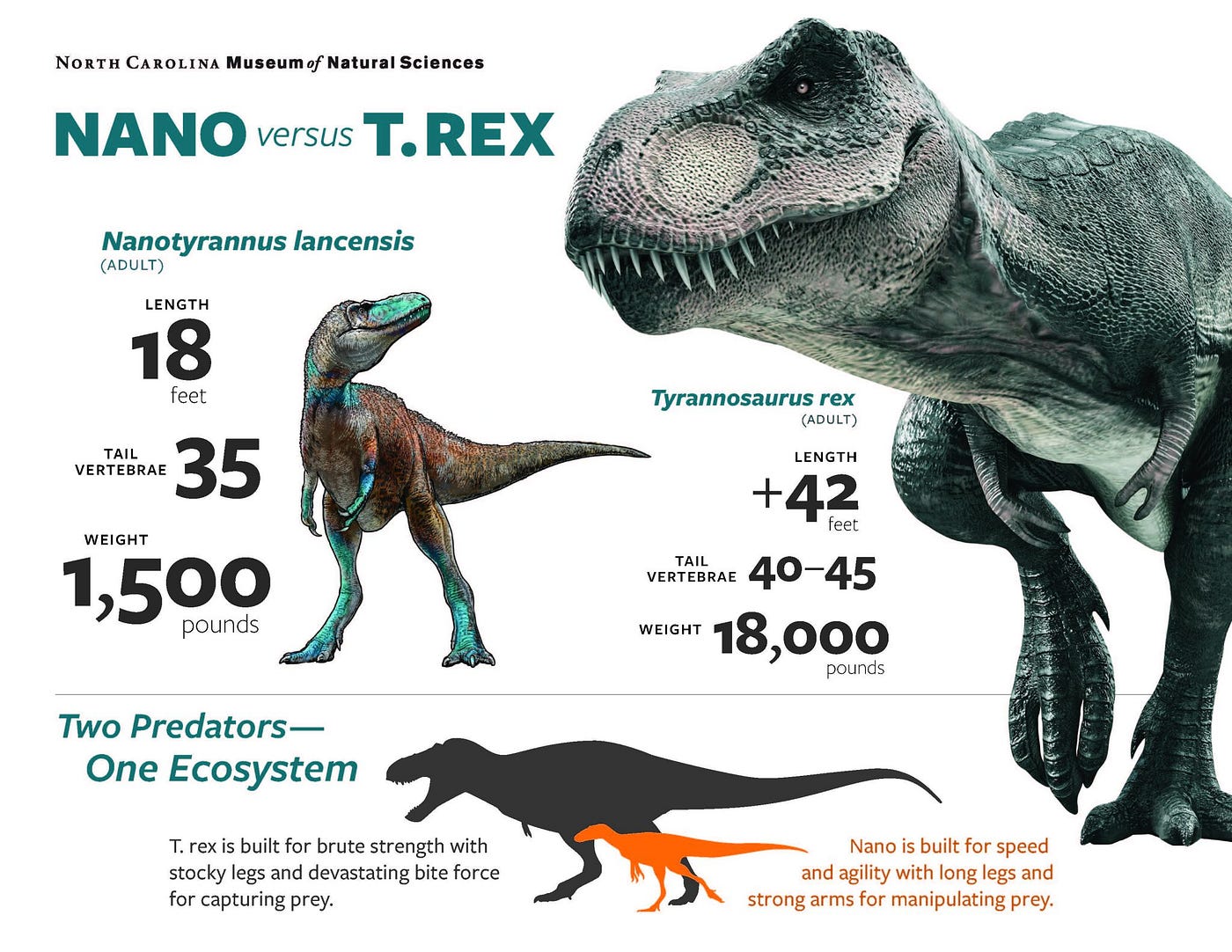
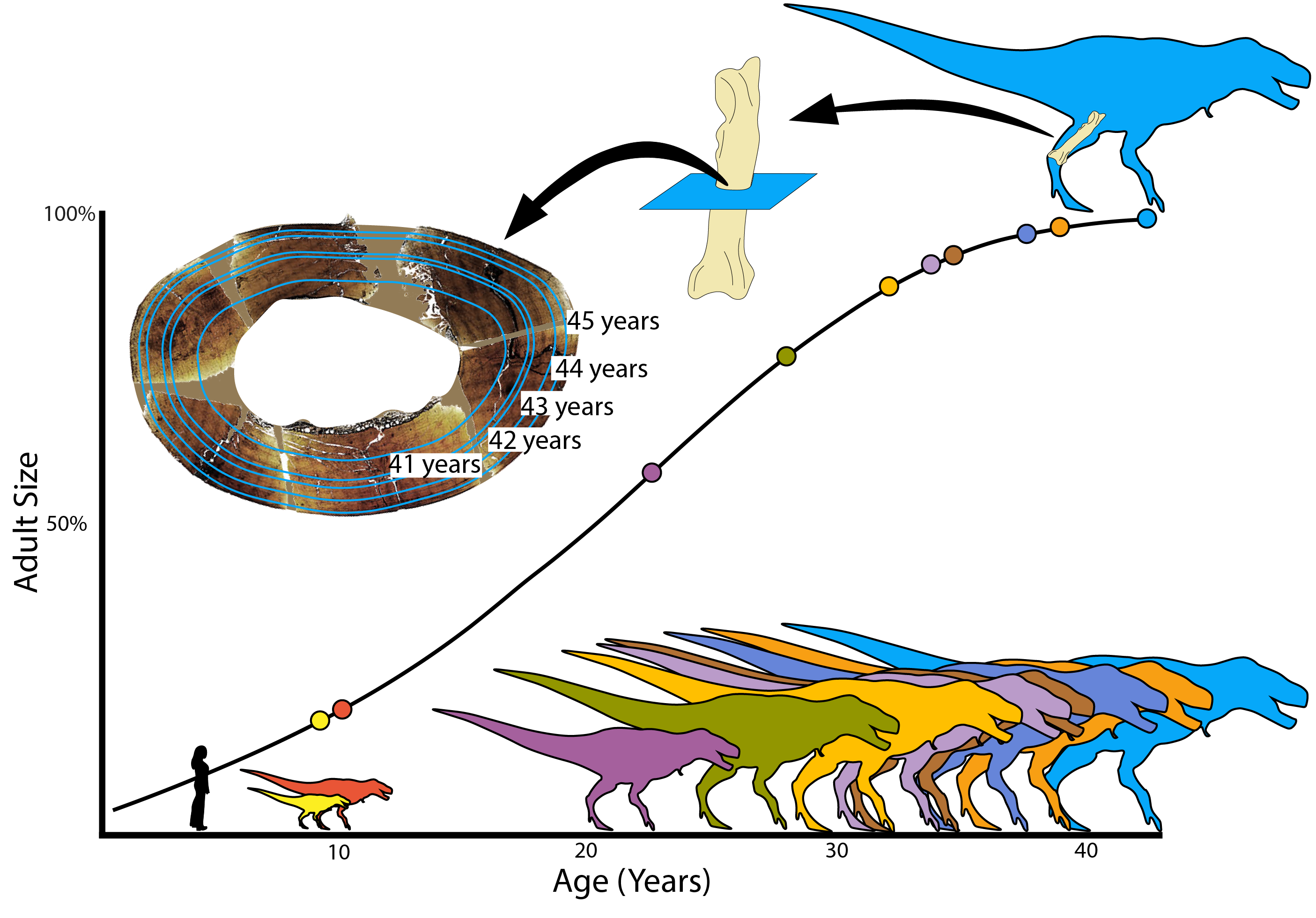
Images will help explain:
- Growth rings (like tree rings) in a microscopic slice of bone.
- Adult vs. Juvenile T-Rex Comparison.
- Growth curve graph (new slow model).
This study isn't just an update, it's a major change. As Lindsay Zaino of North Carolina State University said: "This study is as good as it gets."
Reference:
- Full open-access paper: https://peerj.com/articles/20469
- Science, Reuters, PhysOrg, Scientific American, etc. coverage (January 2026).
This new discovery makes T-Rex even more interesting – are you most intrigued by the bone technology, the species debate, or the new images of T-Rex? 😊


Comments