
In a renewed legal push to defend congressional oversight, a group of House Democrats has returned to federal court to challenge the Department of Homeland Security's (DHS) reissued directive limiting unannounced visits to Immigration and Customs Enforcement (ICE) detention facilities. This latest clash highlights persistent tensions between Congress and the executive branch over transparency and accountability in immigration enforcement operations.
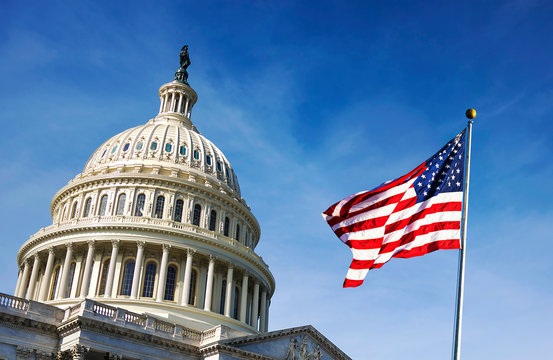
U.S. Capitol building with American flag, symbolizing Congress's oversight role.
Background on the DHS Directive Under DHS Secretary Kristi Noem, a new memo dated January 8, 2026, requires members of Congress to provide at least seven days' advance notice for visits to ICE detention facilities. The policy aims to ensure security and protection for lawmakers, staff, detainees, and ICE personnel. DHS argues that funding for certain facilities comes from specific reconciliation legislation (referred to as the "One Big Beautiful Bill Act"), allowing this restriction without violating broader appropriations rules.
Critics, including leading Democrats such as Reps. Joe Neguse, Adriano Espaillat, Bennie Thompson, Jamie Raskin, and others, assert that the directive violates Section 527 of DHS appropriations law, which protects unannounced congressional access to facilities funded by taxpayer dollars. They describe it as an attempt to circumvent a December 2025 federal court ruling by Judge Jia M. Cobb that temporarily blocked a nearly identical policy.
The Legal Battle Unfolds On January 12, 2026, twelve House Democrats filed court documents renewing their challenge, requesting an emergency hearing. This follows incidents like the denial of access to lawmakers (including Reps. Ilhan Omar, Angie Craig, and Kelly Morrison) at the Whipple federal building ICE facility in Minneapolis over the January 10-11 weekend. The plaintiffs argue the revived policy contravenes the prior court stay and impedes Congress's constitutional duty to oversee how billions in funds are spent amid reports of overcrowding, mistreatment, and other concerns in detention centers.

Exterior of an ICE immigration detention facility, illustrating the sites at the center of the oversight dispute.
Democrats emphasize that unannounced visits are essential for real-time accountability, especially during heightened enforcement and amid ongoing funding negotiations (with DHS appropriations set to expire soon).
Implications for Immigration Policy This dispute arises against a backdrop of intensified immigration operations under the current administration, including mass enforcement efforts and reports of facility strains. Congressional oversight has historically driven improvements in detainee conditions following on-site inspections. The case could influence broader debates on executive authority, separation of powers, and the balance between security needs and legislative checks.

Department of Homeland Security headquarters in Washington, D.C., where the contested policy originated.
Broader Context and Looking Ahead DHS has framed the requirement as a practical safety measure rather than a political barrier, while offering alternatives like coordinated visits. However, Democrats and oversight advocates maintain that in-person, surprise inspections remain irreplaceable for genuine transparency and preventing potential abuses.
As the litigation continues in U.S. District Court (D.D.C.), the outcome may set important precedents for future congressional access to federal facilities. With fiscal year funding deadlines approaching, the dispute underscores the high stakes for immigration policy accountability.
For the most current developments, refer to official court filings, DHS statements, congressional committee releases, or reputable news sources covering the case.


Comments